Buying guide
Best Soldering Stations & Irons UK
Published: · Updated:
Last verified 9 August 2026
For most people the YIHUA 939D+ III EVO station (£69.50) is the best all-round pick — digital PID control with enough wattage (110W) to hold temperature under real use. Tight budget: the YIHUA 926LED-IV station (£32.50). Want a handheld iron instead of a bench station: the Pinecil V2 (~£30) gives you digital control without the base unit. Need to skip the mains base entirely: the YIHUA 928D-IV (£34.50) runs off USB-C PD.
Soldering stations compared
Iron + control base — better temperature holding for regular use.
| Station | Price | Power | Temp range | Control | Best for |
|---|---|---|---|---|---|
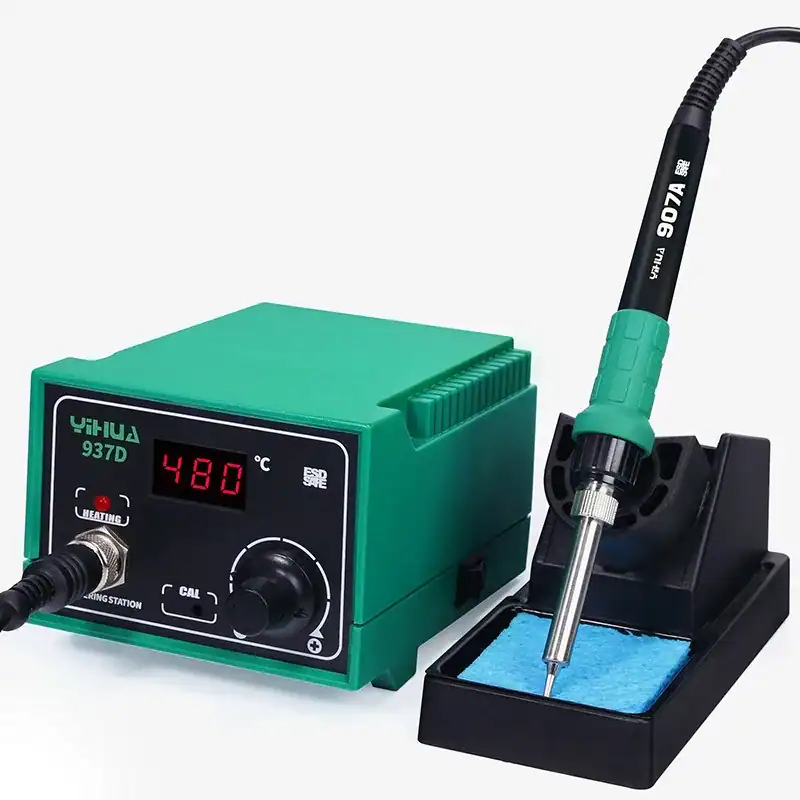
| £39 | 75W | 200–450°C | Digital, LED display | Clearly-stated 75W and tight 200–450°C range for a budget digital station | |
| £32.50 | not published | 90–480°C | Digital/PID, LED display | Cheapest station in this comparison, wide 90–480°C range | |
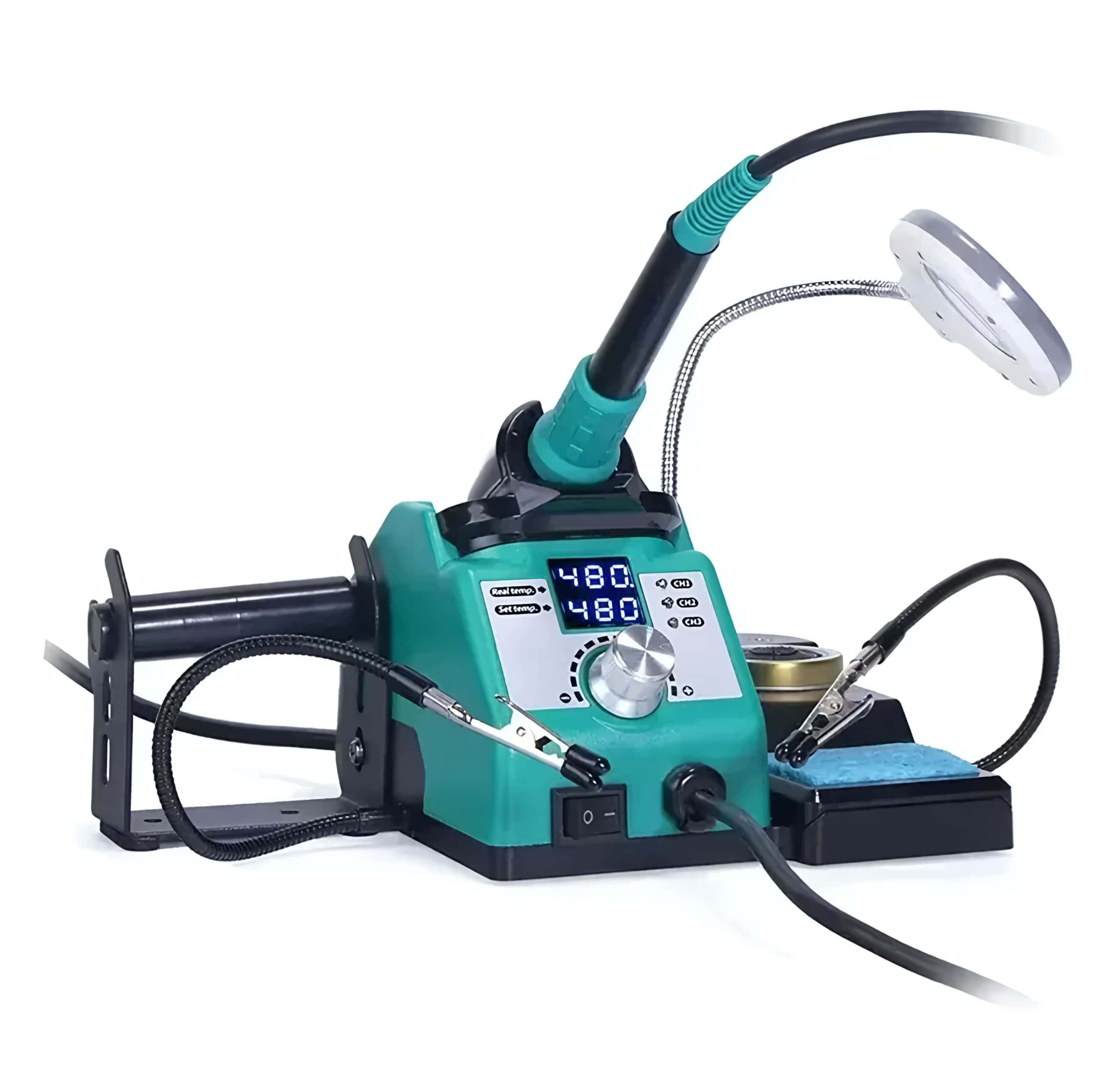
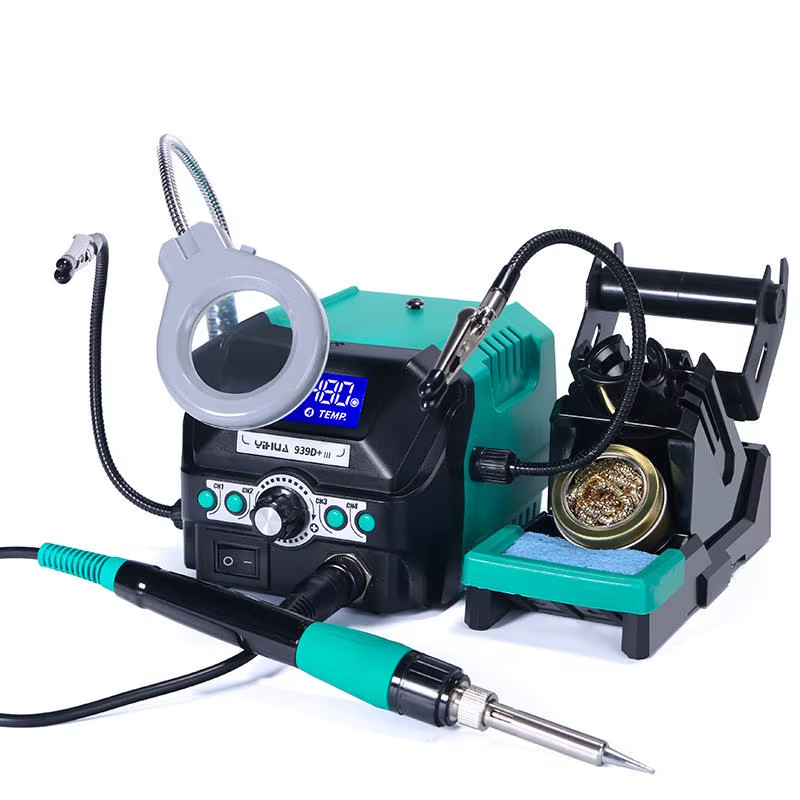
| £69.50 | 110W | 200–480°C | Digital PID, dual LCD display | Best for beginners stepping up from a budget iron | |
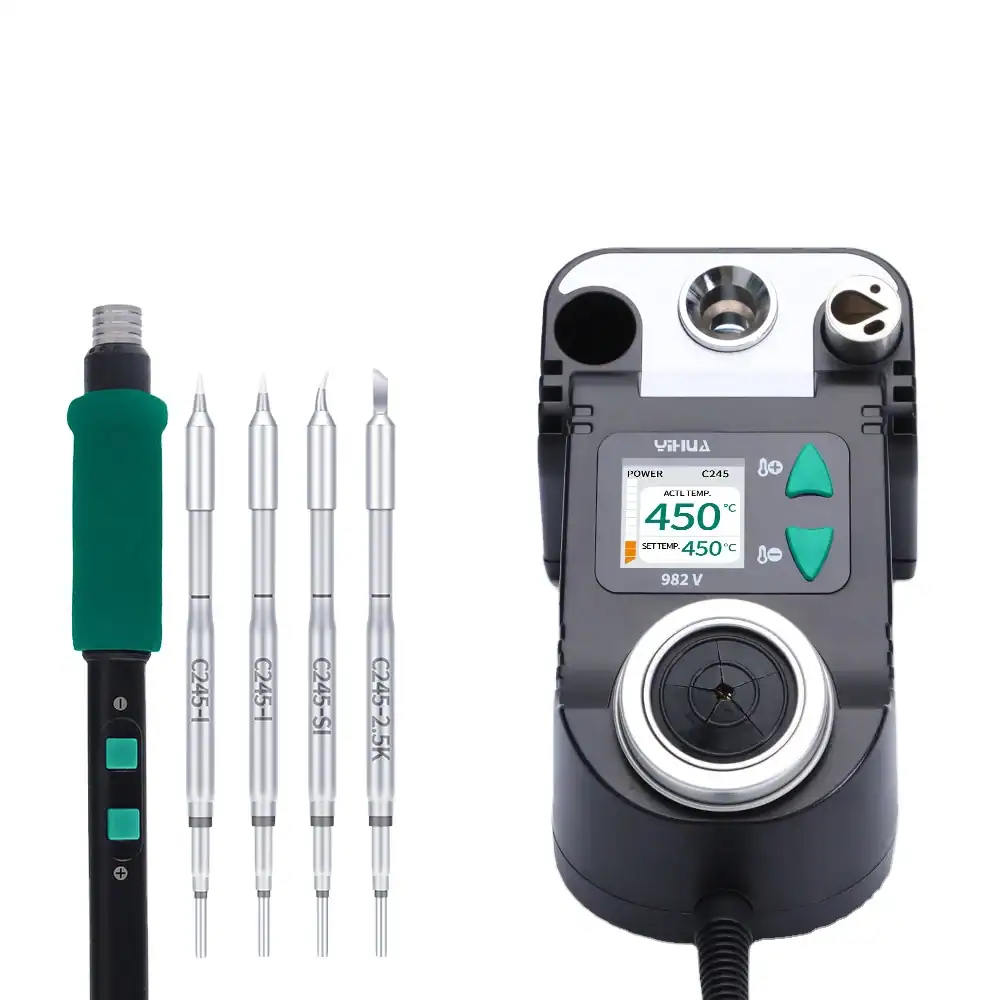
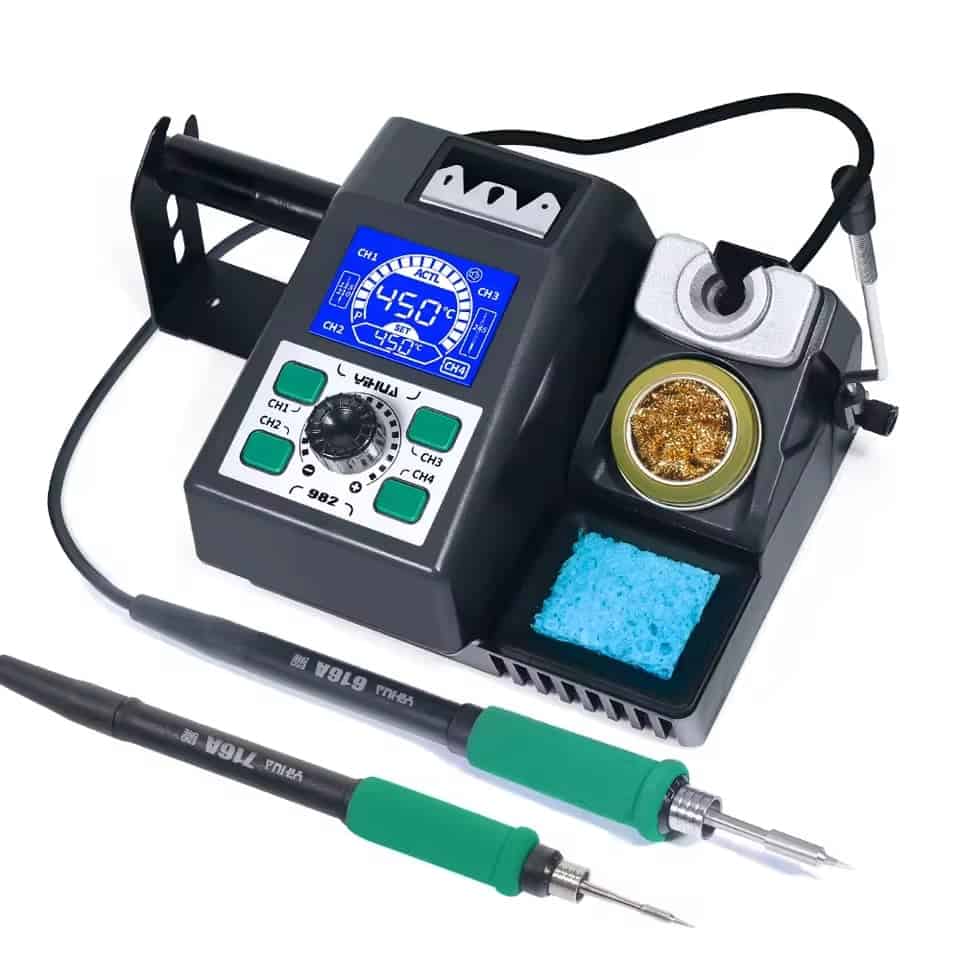
| YIHUA 982-V | £36.90 | 60W | 90–450°C | Digital PID, JBC-compatible C245 tips | Entry-level cartridge (C245) station |
| YIHUA 982 dual-handle | £68 | C210: 40W / C245: 60–120W | 90–450°C | Digital PID, C210 + C245 cartridge | Precision work — two cartridge families on one base |
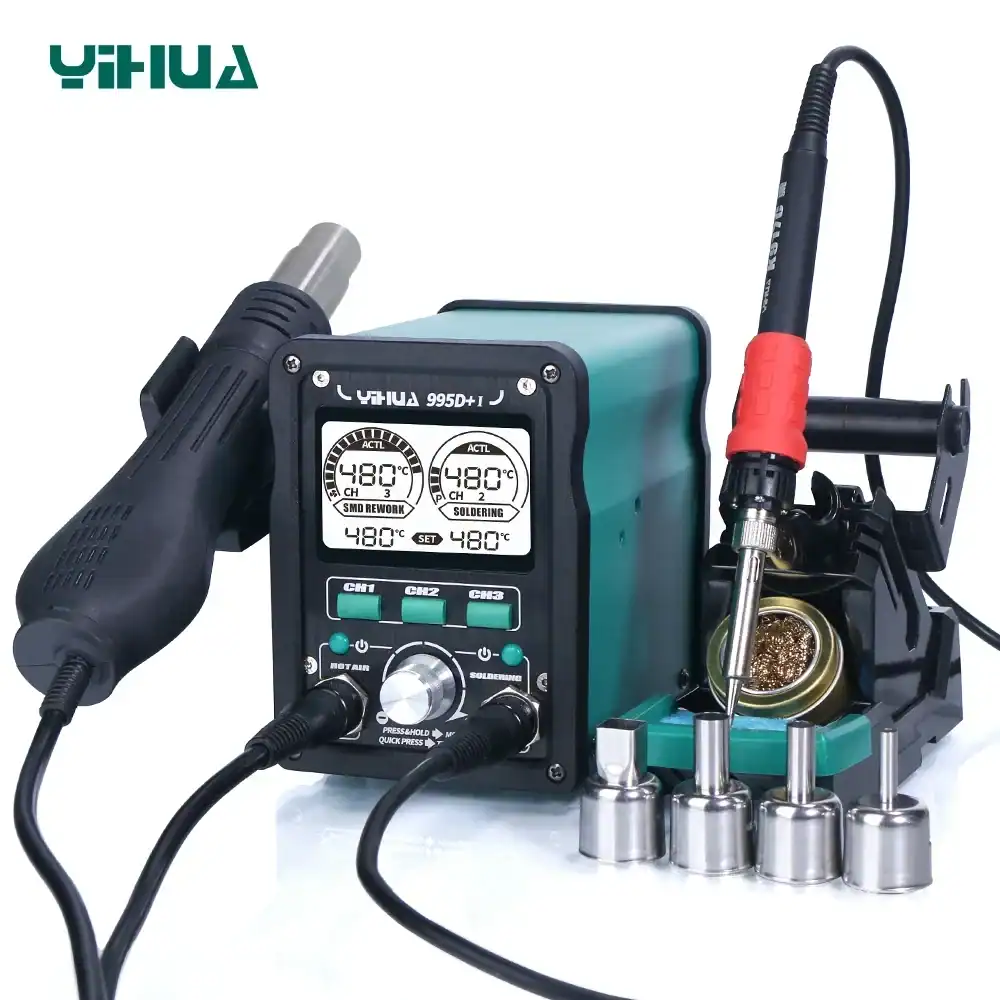
| £89.50 | 110W iron + hot air | iron 200–480°C, hot air 100–480°C | Digital PID, iron + hot-air combo | Advanced users needing SMD rework alongside soldering | |
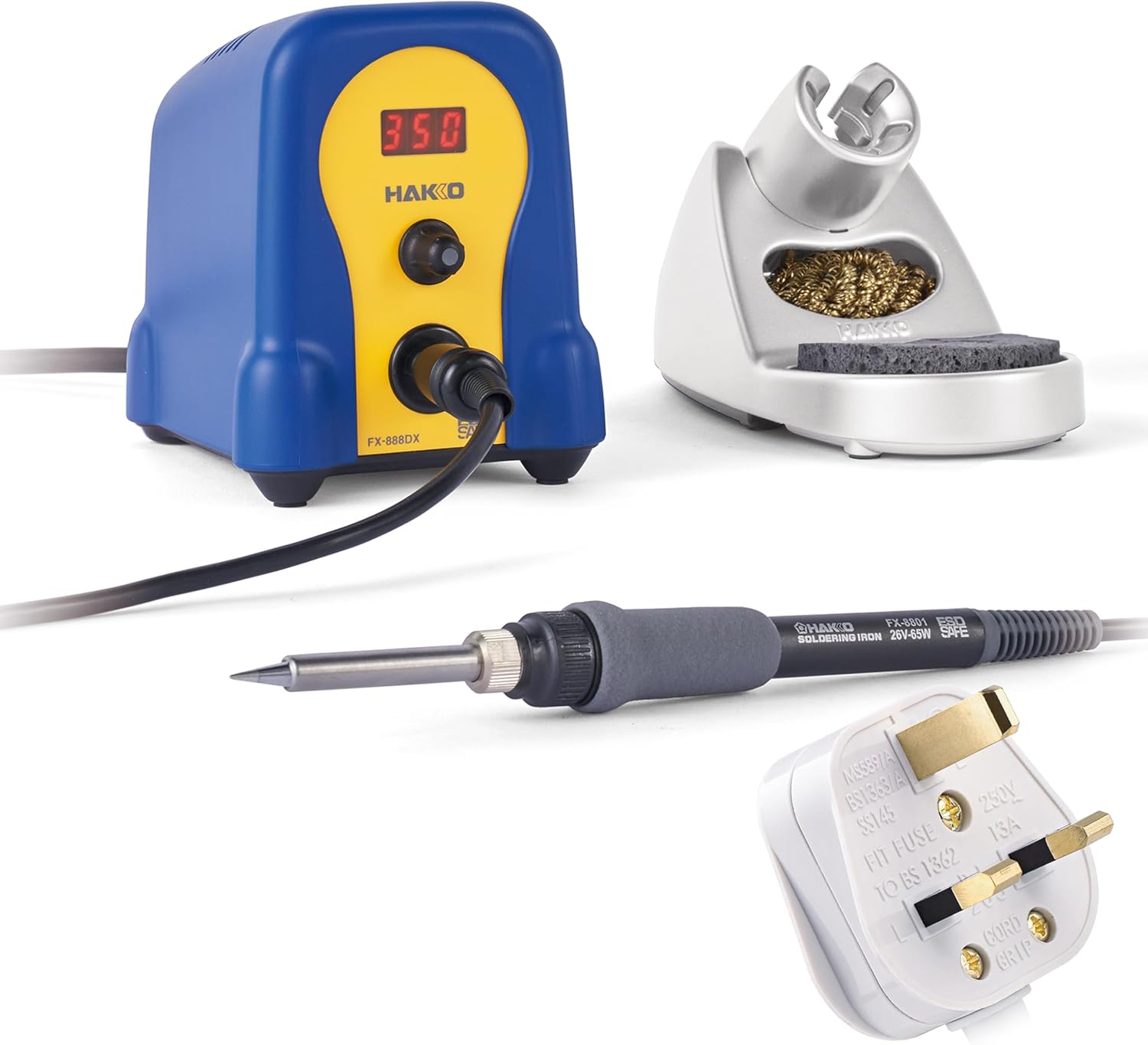
| ~£100–120 | 70W | 200–480°C | Digital | Industry-standard bench station most electronics techs learn on | |
| Weller WE1010NA | ~£100–110 | 70W | up to 450°C | Digital, colour-coded temp presets | Weller-ecosystem buyers wanting a US/EU brand name |
| FNIRSI DWS-200 | £109 | 200W | 100–450°C | Digital, 4.8in colour display, 3 preset slots | Highest wattage here — fast recovery on larger joints, C210/C245 cartridge choice |
Soldering irons compared
Handheld, no separate base — simpler and usually cheaper.
| Iron | Price | Power | Temp control | Best for |
|---|---|---|---|---|
| £34.50 | 60–65W (USB-C PD/QC) | 90–450°C | USB-C powered — no bulky mains base, fast 5-second heat-up | |
| ~£25–30 | 25W | ~370°C (fixed) | UK-made simple pencil iron, light electronics work | |
| ~£20–25 | 18W | ~390°C (fixed) | Lighter-gauge fine work, hobbyist bench | |
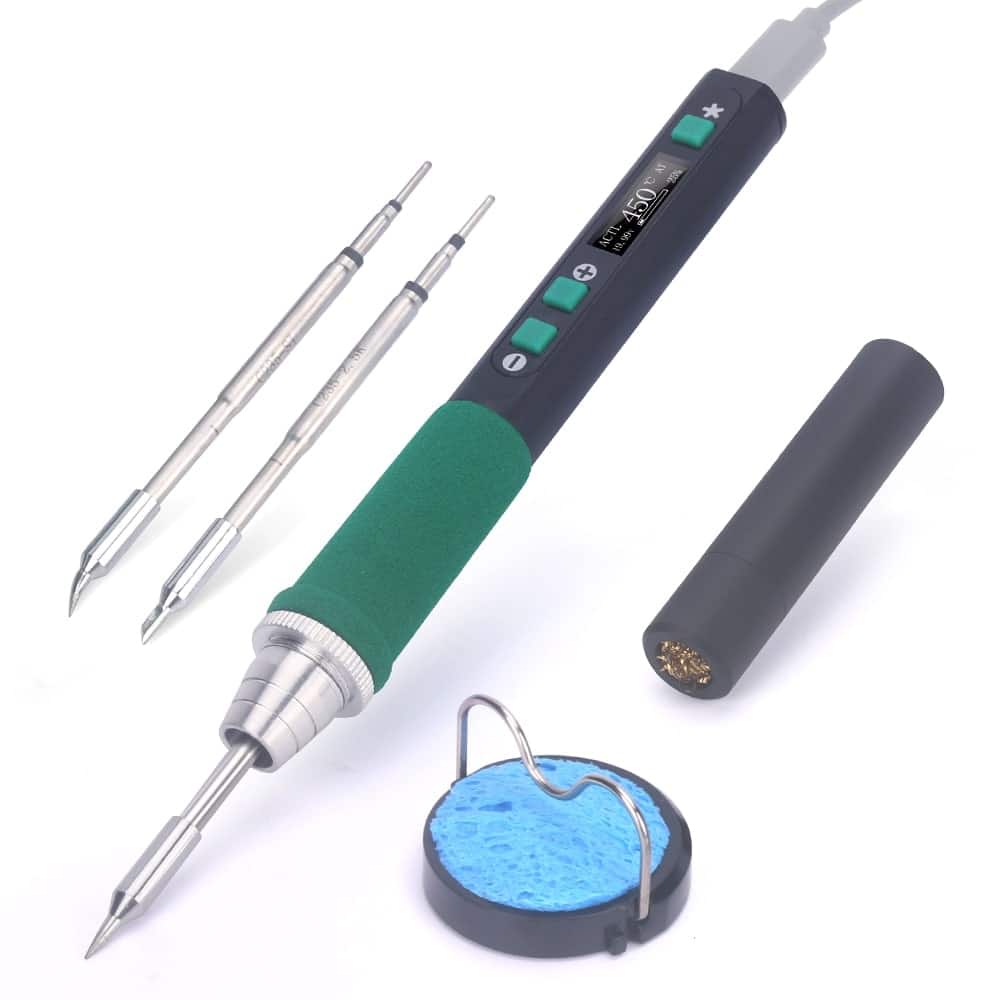
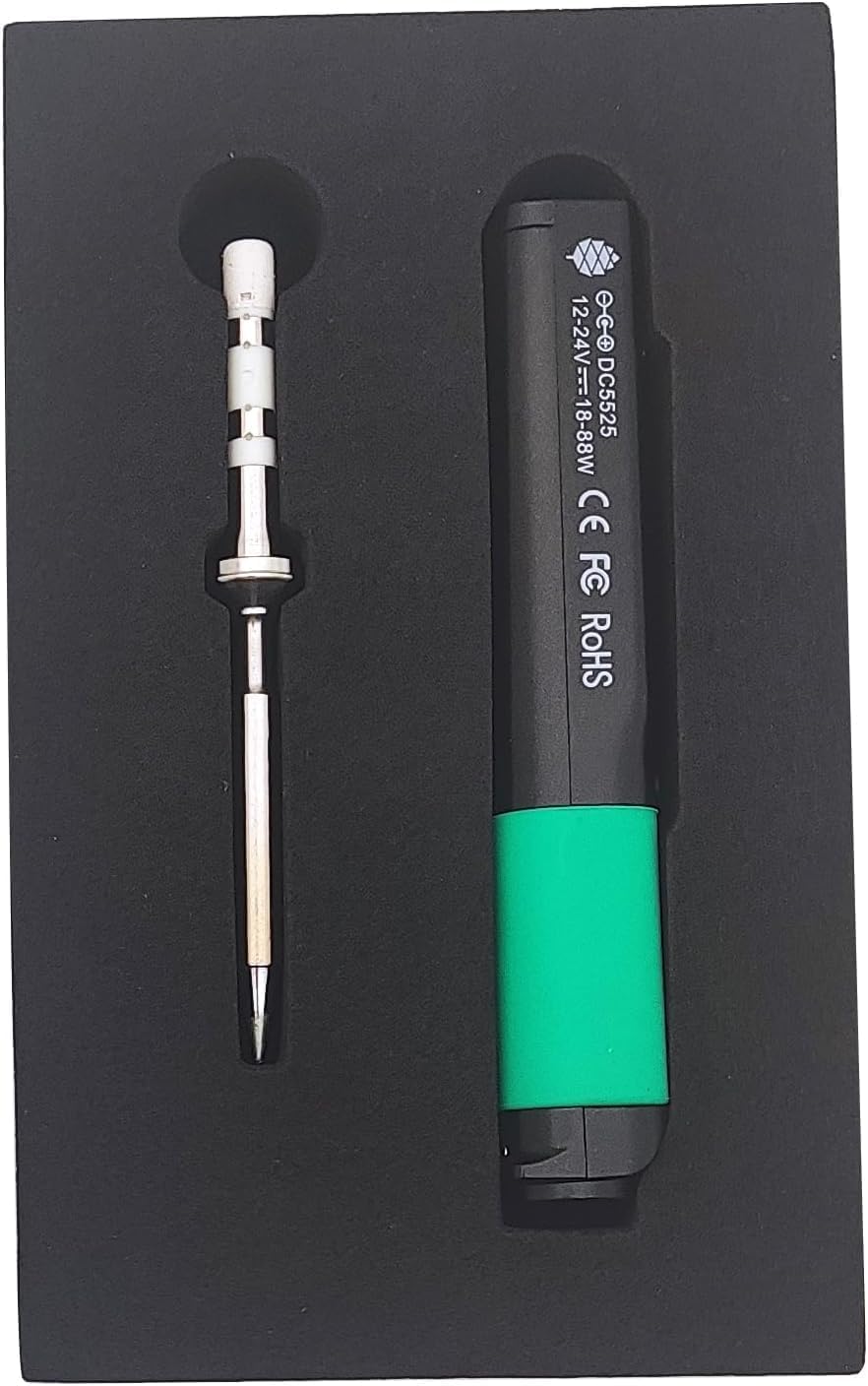
| ~£25–35 | up to 65W (USB-C PD) | adjustable, digital | Best value smart iron — open-source firmware, USB-C powered | |
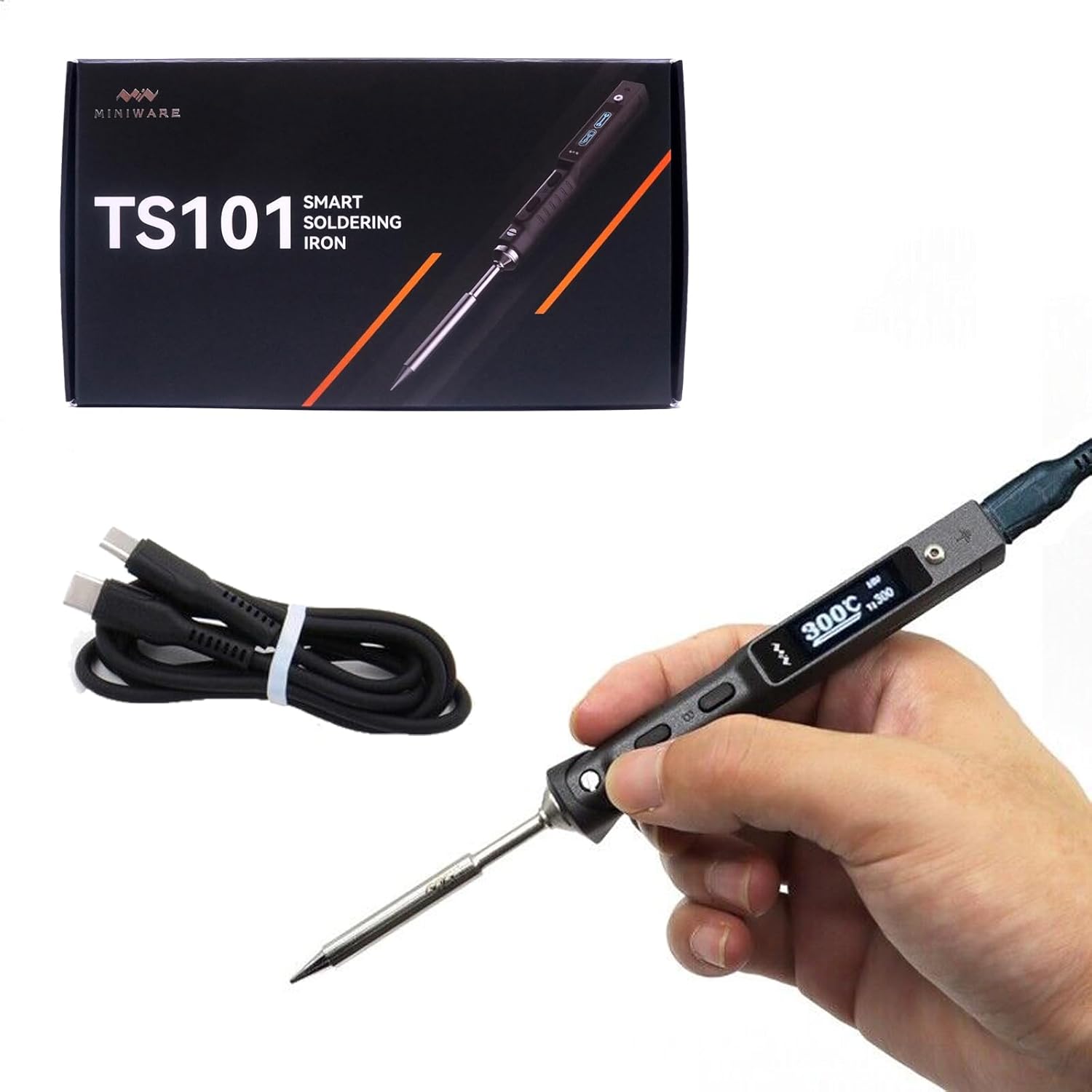
| ~£55–65 | up to 65W (USB-C PD) | adjustable, digital, OLED | Compact smart iron for mobile repair / on-the-go use |


YIHUA and FNIRSI prices/specs per kunkune, a UK stockist. Other brand prices are typical UK street price — check current retailer pricing before buying.
Picks by use case
- Best budget station
- YIHUA 926LED-IV
- Cheapest station in this comparison, wide 90–480°C range
- £32.50 · not published
- Best station for beginners
- YIHUA 939D+ III EVO
- Best for beginners stepping up from a budget iron
- £69.50 · 110W
- Best for rework (iron + hot air)
- YIHUA 995D+ I EVO
- Advanced users needing SMD rework alongside soldering
- £89.50 · 110W iron + hot air
- Best USB-C powered iron
- YIHUA 928D-IV
- USB-C powered — no bulky mains base, fast 5-second heat-up
- £34.50 · 60–65W (USB-C PD/QC)
- Best simple pencil iron
- Antex XS25
- UK-made simple pencil iron, light electronics work
- ~£25–30 · 25W
- Best smart iron for the money
- Pinecil V2
- Best value smart iron — open-source firmware, USB-C powered
- ~£25–35 · up to 65W (USB-C PD)
Buying guides by use case
Which pick is right depends on what you're actually using it for.
- Best Soldering Station for Beginners
- Best Soldering Station for Electronics
- Best Budget Soldering Station UK
- Best Professional Soldering Station
- Soldering Station for Automotive Wiring
- Soldering Station for Mobile Phone Repair
- Best Soldering Iron
- Best Soldering Iron for Electronics
- Best Soldering Iron UK
- Best Soldering Iron for Beginners
- Best Soldering Iron Kits UK
How-to guides
Once you've picked a tool, here's how to actually use it.
- How to Solder: A Beginner's Guide
- How to Solder Wire (Wire-to-Wire Joints)
- How to Solder With Flux (And Why It Matters)
- Which Solder Wire Should You Use With Your Iron?
- How to Solder a PCB (Through-Hole Components)
- Soldering Projects for Beginners (What to Practice On)
- Soldering Tips: Common Mistakes and How to Fix Them
- Lead-Free vs Leaded Solder: Which Should You Use?
How to choose
Station vs iron is a usage decision, not a quality one. A station holds temperature more precisely because a base unit manages it — worth it if you solder often. An iron is simpler and cheaper, and a good digital handheld (Pinecil, TS101) closes most of the control gap without the base.
Wattage decides recovery speed, not raw "power." A 60W and a 75W station both reach the same working temperature — the difference shows up when the tip touches a large joint and needs to recover heat fast. Under 60W is fine for fine PCB work; go higher for thicker connectors or ground planes.
Only pay for hot air if you'll use it. Combo iron+hot-air stations add real capability for SMD rework, but if you're doing through-hole electronics or general repairs, that cost buys nothing you'll use.
Soldering station types and temperature control
Soldering station types differ in both their control system and the way the heated tip is fitted. A digital display makes a temperature setting readable, but a display alone does not describe how the heater is controlled. PID control adjusts heater output in response to temperature changes. The YIHUA 926LED-IV and YIHUA 939D+ III EVO list PID control, while the Hakko FX888D is listed as digital.
Cartridge stations use a tip assembly that combines the working tip with its heater. The YIHUA 982-V lists JBC-compatible C245 tips. The YIHUA 982 dual-handle lists C210 + C245 cartridge control, with C210: 40W / C245: 60–120W. Check the exact handle and cartridge match before ordering replacements. The YIHUA 995D+ I EVO adds another control task, with separate iron and hot-air temperature ranges rather than one shared working setting.
What soldering station prices buy
Soldering station prices in this comparison do not rise in a simple order with wattage or control type. At £36.90 from kunkune, the YIHUA 982-V offers 60W and a C245 tip system. The YIHUA 937D+ costs £39 and lists 75W with digital LED control. The extra spend buys a different combination of features, rather than an upgrade in every column.
The YIHUA 982 dual-handle at £68 and YIHUA 939D+ III EVO at £69.50 sit close in price but serve different needs. The former offers two cartridge families. The latter lists 110W and a dual LCD display. At £109, the FNIRSI DWS-200 lists 200W, a 4.8in colour display and 3 preset slots. The Hakko FX888D has a typical UK street price of ~£100–120 and lists 70W. Compare the controls and tip options alongside the price, then check the current offer and stock.
Soldering station temperature ranges for different solder
A soldering station temperature range describes available settings, rather than the temperature every joint needs. The YIHUA 982-V lists 90–450°C, while the Hakko FX888D lists 200–480°C. Both ranges cover common electronics soldering settings. A higher maximum does not mean that routine work should use that maximum.
Leaded solder often works with tip settings around 300 to 350°C. Lead-free solder often needs around 330 to 380°C. These are starting ranges, because solder alloy, tip contact and joint size affect heat transfer. Follow the solder supplier's guidance and use the lowest setting that lets the joint form promptly. Raising the setting to compensate for poor contact can damage a board or speed up tip oxidation. Clean and tin the tip before judging the temperature.
FAQ
Q.Where can I buy a YIHUA or FNIRSI soldering station in the UK?
Kunkune is a UK stockist of genuine YIHUA and FNIRSI soldering equipment, competitively priced and a good fit for electronics projects, with free UK delivery over £35, a 60-day returns policy and a 12-month warranty on covered products. It's not an official or exclusive distributor for either brand — just where we've sourced the YIHUA and FNIRSI models in this comparison.
Q.Should I buy a soldering iron or a soldering station?
Short answer: an iron for occasional or light hobby use, a station if you'll solder weekly or more and want tighter temperature control. See our best soldering iron guide for the full breakdown.
Q.How many watts do I need?
18–25W is enough for light hobby electronics on a handheld iron. For a station, 60–110W gives faster heat recovery on general work. Go higher — or add hot air — only if you're doing rework on multi-layer PCBs or larger ground-plane joints that pull heat away fast.
Q.Is digital temperature control worth paying more for?
If you solder often enough to notice temperature drift, yes — digital/PID control holds the set temperature far more consistently than a fixed-temperature iron, especially at lower wattages. For occasional use, a well-made fixed-temperature model is still perfectly usable.
Q.What's the difference between YIHUA's station range?
kunkune's UK-stocked YIHUA line runs from the 926LED-IV (cheapest, digital PID) and 937D+ (75W, digital LED) up through the 939D+ III EVO (110W, sleep mode) to the 995D+ I EVO, which adds a separate hot-air gun to the same base for SMD rework. Pick by wattage and whether you need hot air, not by model number alone — and check stock, since the cheaper models move in and out of availability.
More questions answered in our full FAQ index.